
With the development of medical technology, the prevention and control of hospital infections are facing more and more challenges. According to statistics, the hospitalization rate in China is about 3.6%, and the annual economic loss caused by hospitalization reaches 1 to 1.5 billion yuan. Intravenous infusion is one of the important causes of hospital-acquired infections. The particles contaminating the intravenous infusion process are usually non-metabolic particles, such as fibers, dust, synthetic polymer materials, microorganisms, etc. Therefore, solving particulate contamination in infusions at this stage is of great significance.
Drug compounding is an important part of intravenous infusion. The survey results on the factors causing hospital-acquired infections related to compounding show that failure to strictly implement procedures accounts for 48.68%; about 30.26% of compounding environments are unqualified; long-term neglect by dispensing personnel accounts for about 42.65%; and the pathogen detection rate of syringes used for drug compounding reaches 10.6%. Therefore, improving the current status of drug compounding is the key to reducing the hospitalization infection rate.
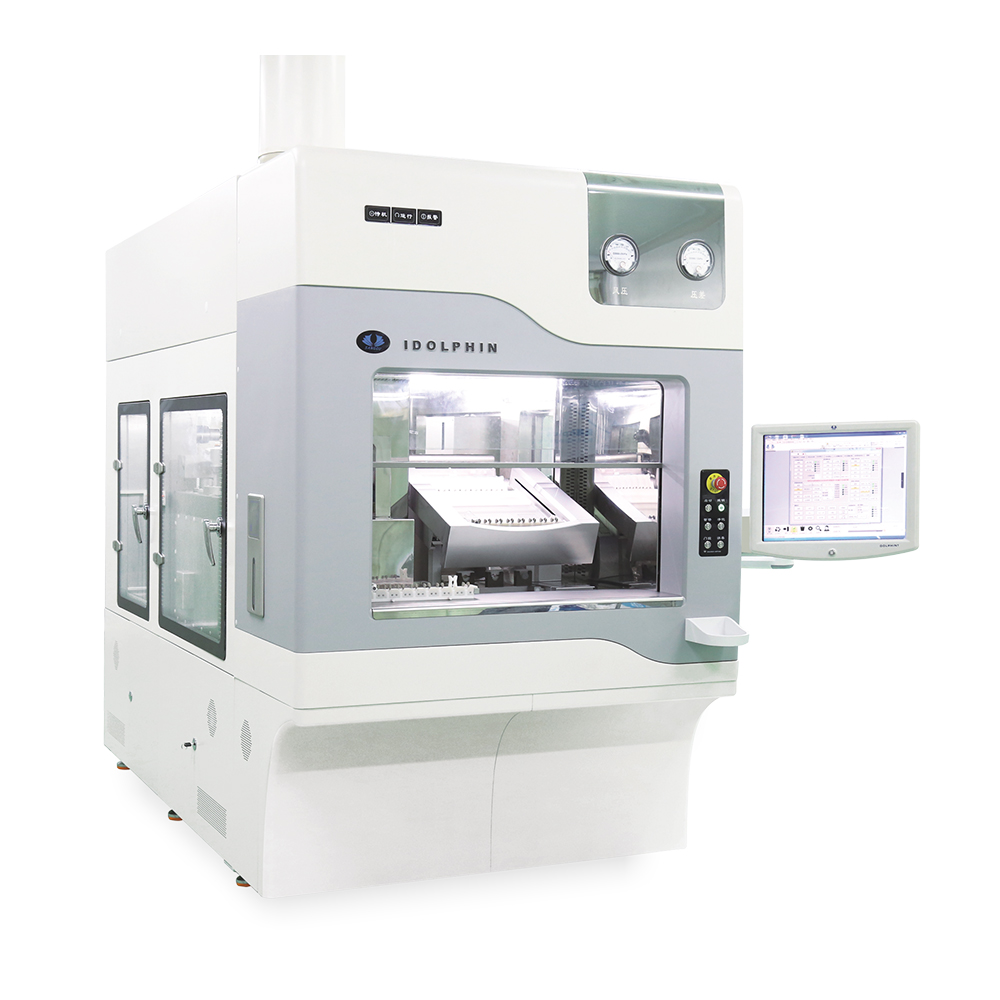
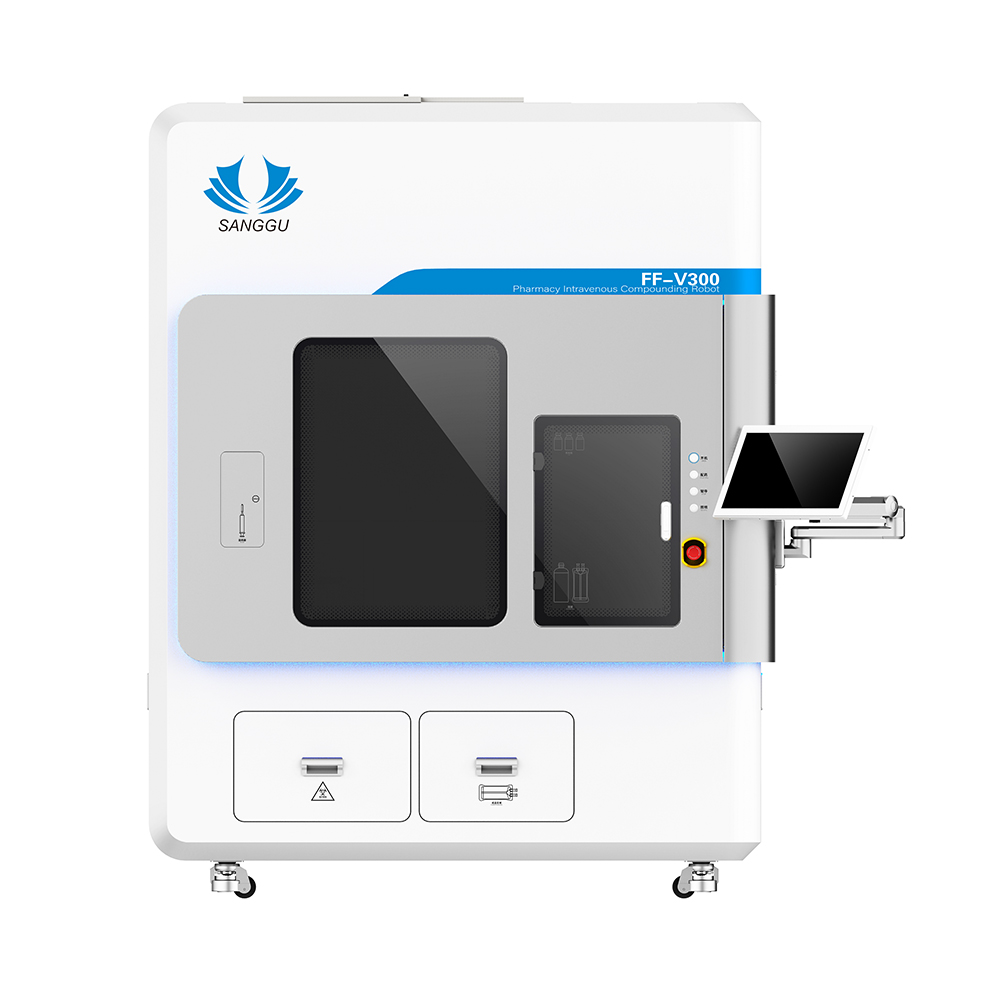
Based on the above, the development of drug compounding robots has successfully addressed the risks brought by existing drug compounding models. The drug compounding robot is a major innovation in medical history. Shenzhen Sanggu Medical Robot Co., Ltd. was founded in 2010 and is a joint-stock company established with equity participation from Hunan Hengyang Hengshan Science City Investment and Development Co., Ltd. and Han's Laser Technology Industry Group Co., Ltd. (002008.sz). Shenzhen Sanggu added a wholly-owned subsidiary, "Hengyang Sanggu Medical Robot Co., Ltd.," in Hengyang, Hunan in 2015 as Sanggu's production center, with its factory buildings and functional buildings located in Hengshan Science City, Hengyang.
The drug compounding robot adopts a deep neural network learning algorithm for drug compounding, automatic bottle recognition, motion control algorithms, and drug compounding error compensation technology; it is equipped with world-class sensors. With different vial specifications, different volumes and pressures, the sensors can automatically calculate the vial volume and adjust the pressure, thereby completing quantitative extraction of the drug solution. It uses fine-tuning manipulator technology to achieve syringe rotation, with the mechanical gripper correcting the needle for accurate aspiration and high drug solubility.
The advantages of drug compounding robots mainly include the following:
1. Liberating the workforce, replacing the heavy manual labor of pharmacists (nurses), easily completing drug compounding work, and ending the more than 200-year history of manual drug compounding.
2. Improving work efficiency, increasing the hourly dosage from 50-60 bags/person to about 200 bags.
3. Reducing hospital costs.
4. Avoiding occupational injuries to pharmacists and nurses.
5. Regulating the drug compounding process and reducing the hospital infection rate.
From a social perspective, drug compounding robots benefit the country and the people. They can reduce the hospital infection rate, ensure the safety of patient medication, liberate the workforce, improve labor productivity, eliminate occupational injuries to pharmacists and nurses, standardize and normalize hospital drug compounding, ensure drug effectiveness and timeliness, and improve hospital service quality. From an economic perspective, the drug compounding robot project can reduce medical financial expenditures, reduce medical insurance expenditures, and achieve medical automation, enabling hospitals to provide better services to patients.