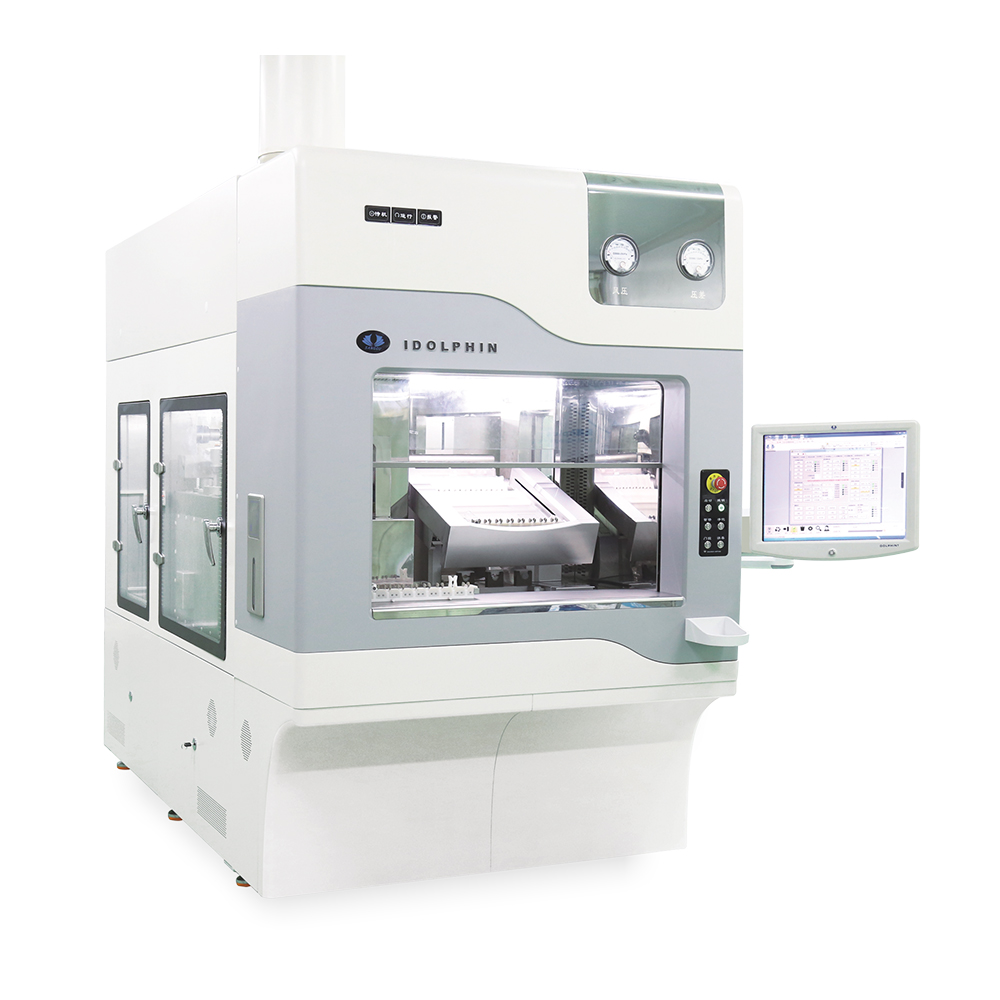
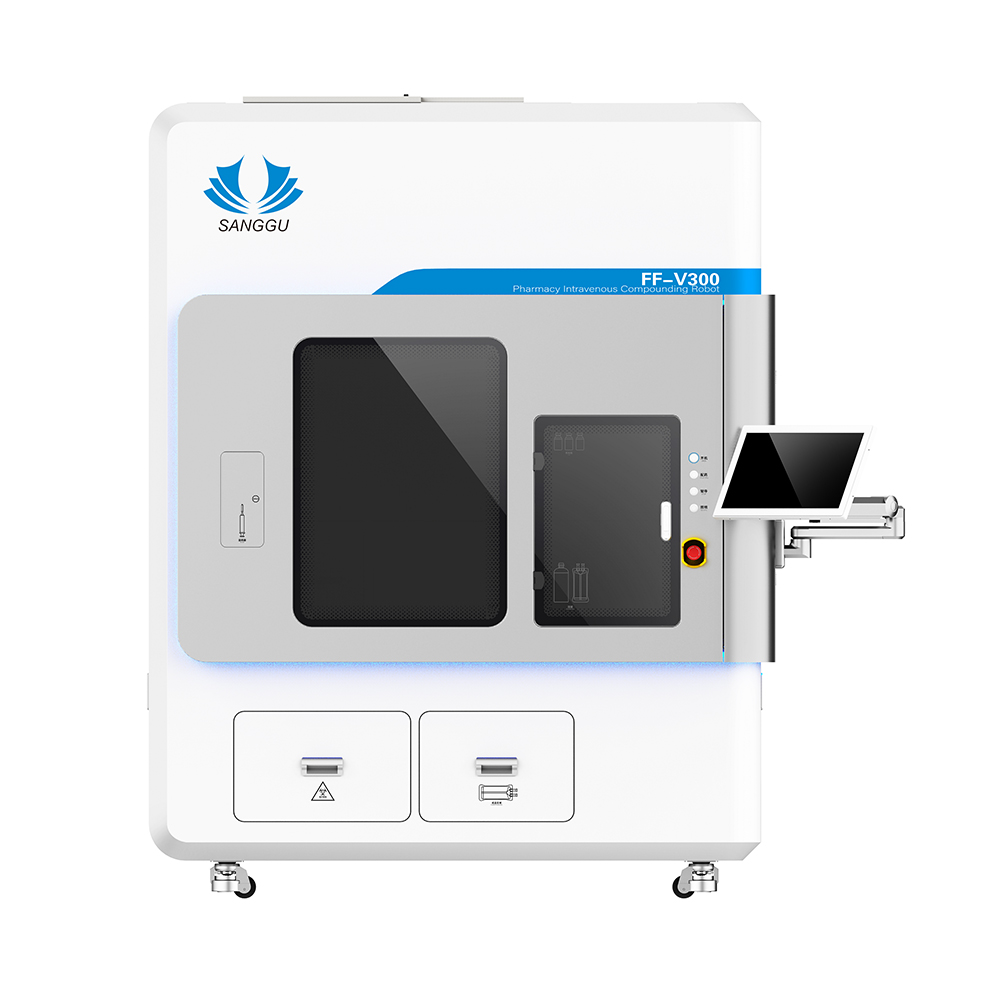

Intravenous drug compounding robots are mainly suitable for nurses' stations. After using intravenous drug compounding robots, labor efficiency can be improved, labor intensity reduced, and medical staff protected. "It means replacing the manual parts of drug compounding with machinery."
Currently (2016), drug compounding mainly relies on manual labor, roughly divided into seven steps: disinfection, aspirating the base solution, inserting into the vial and injecting water, rotating twice and withdrawing the needle, shaking or oscillating the liquid, aspirating the drug solution, injecting it back into the base solution bag, and separating the needle from the syringe. Zheng Yongqiang said that this method places high demands on the labor intensity of compounding pharmacists and is prone to compounding errors; the glass of drug bottles can also easily cut nurses, posing occupational hazards to compounding pharmacists. In addition, if nurses accidentally touch the empty syringe part during the compounding process, it can easily lead to contamination of the drug solution.
"Intravenous drug compounding robots are helpful in resolving medical disputes," Zheng Yongqiang said. In the future, the treatment of patients, including the types, doses, and times of drug compounding, will have a basis to rely on and can be monitored in real time.
In terms of improving work efficiency, this robot also has a great advantage. "An ordinary nurse can compound 25-30 bottles per hour, and a skilled one can reach 30-40 bottles. But the robot can compound 300 bottles of drug solution per hour," Zheng Yongqiang said. Compared with the intravenous drug compounding robot developed in the United States, the intravenous drug compounding robot he developed occupies a smaller area, requiring only 1-2 square meters; the intravenous drug compounding robot developed in the United States can only handle drug solutions in vials, processing 60-70 bottles of drug solution per hour, while the intravenous drug compounding robot he developed can handle drug solutions in both vials and ampoules, and can compound 300 bottles per hour, fully meeting clinical medication needs.