
The ability to rapidly change their own DNA is one of the typical characteristics of cancer cells; however, in their haste to acquire new mutations, they inadvertently discard many inherited genetic variations. This may result in cancer cells retaining only the defective allele from one parent, whereas healthy cells also have a functional allele from the other parent. This characteristic of cancer cells is very likely to become an Achilles' heel for new drug development.
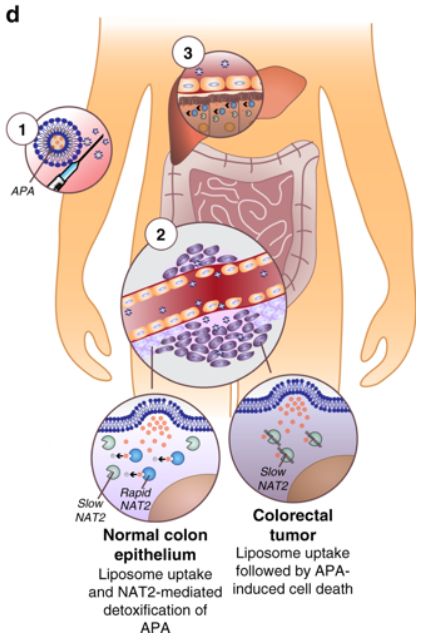
Image Source:Nature Communications
"Among the genes we looked for, many people's DNA carries both functional and defective alleles," explained Tobias Sjöblom of the Department of Immunology, Genetics and Pathology at Uppsala University. "One of these genes, NAT2, produces a protein that metabolizes many drugs, and notably, one allele is frequently lost during the development of colon and rectal cancer."
Based on their findings, the researchers developed a substance that can kill cells lacking NAT2 and were able to demonstrate that it can be used to treat cancer in animal models and tumor cells from patients.
Tobias Sjöblom said, "The 50,000 colorectal cancer patients diagnosed globally each year all meet the treatment criteria, so we will continue our efforts to find substances with better performance for drug development."
References:
[1] Careless cancer cells may be susceptible to future drugs
[2] Tobias Sjöblom et al. Exploiting loss of heterozygosity for allele-selective colorectal cancer chemotherapy, Nature Communications (2020). DOI: 10.1038/s41467-020-15111-4
This article is sourced from Bioon. For more information, please download the Bioon APP (http://www.bioon.com/m/).